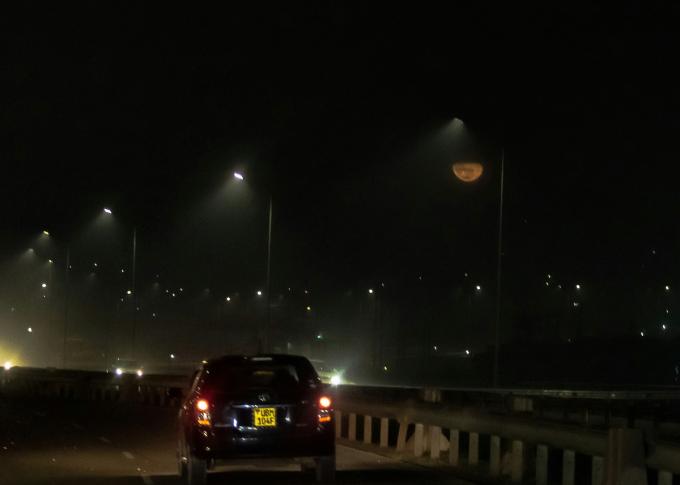
Photo by Michael Starkie on Unsplash [https://unsplash.com/pt-br/fotografias/carros-dirigindo-em-uma-estrada-…]


When Ugandans went to the polls in January 2026, they did so in an environment shaped not only by political contestation, but also by deliberate digital silence. What unfolded was not an isolated technical disruption, but a calculated sequence of state actions that fundamentally weakened electoral credibility, constrained civic participation and exposed activists, journalists and voters to grave risks.
This is the story of how we got there, what it meant on the ground and what must happen next.
From assurances to silence: A timeline of events
In the months leading up to the January 2026 general elections, government officials repeatedly assured the public that the internet would not be shut down. These statements were framed as evidence of learning from past elections and a commitment to democratic openness.
Yet behind the scenes, warning signs were already emerging.
Civil society actors, journalists and technologists observed an escalation of regulatory pressure, hostile public rhetoric and administrative actions targeting independent civic space. These developments prompted Unwanted Witness (UW), together with the Women of Uganda Network (WOUGNET) and the Human Rights Network for Journalists-Uganda (HRNJ-Uganda), to launch a proactive intervention: Safeguarding Digital Rights and Internet Access During Uganda’s 2026 General Elections.
As part of this effort, we convened pre-election digital rights coordination forums, operationalised a Shared Alert Protocol for Digital Rights Incidents, and rolled out the Keep the Internet On for Elections campaign to mobilise public awareness and build pressure against digital repression.
Despite these efforts and despite public statements by the powers-that-be, Ugandans learned of the impending shutdown not through an official government announcement, but through a leaked directive from the Uganda Communications Commission (UCC). Dated 13 January 2026, the communique, citing security concerns, ordered all mobile network operators and internet service providers to suspend public internet accesss, as well as selected mobile telephony services, with immediate effect.
This moment was pivotal. The secrecy of the decision, the absence of public notice and the contradiction of earlier assurances shattered trust and signalled a deliberate choice to govern the electoral process in darkness.
Elections without visibility
Public campaigning stopped on 13 January, the day and time when the internet was blocked. On 15 January 2026, as voting commenced, Uganda was offline.
The shutdown was sweeping. Public internet access was blocked nationwide. Social media platforms, messaging apps and online publishing tools went dark. Journalists could not report in real time. Election observers were unable to transmit findings. Civil society organisations lost their primary means of coordination. Ordinary citizens were cut off from information, emergency communication and livelihoods.
Elections, by their nature, depend on transparency. In Uganda, that transparency was removed.
With the internet off, accountability mechanisms collapsed. Irregularities could not be documented or shared. Violence, intimidation and coercion occurred beyond public scrutiny. Communities voted without access to verified information, while results transmission and verification took place in an environment shielded from public oversight.
As we have repeatedly stated: elections conducted in digital darkness cannot be free, fair or credible.
On 18 January 2026, five days after the shutdown began, internet access was partially restored. While this provided relief to millions of Ugandans, the restoration was incomplete. Social media and messaging platforms remained restricted, and the damage had already been done.
In a joint statement, UW and WOUGNET welcomed the restoration but made it clear that reconnection does not erase violations as electoral integrity had already been compromised. Fundamental rights to freedom of expression, access to information and participation in public affairs had been breached and economic losses had incurred.
The cost to activists and civic space
For activists, journalists and human rights defenders, the shutdown was not merely an inconvenience, it was a protection failure.
The absence of connectivity increased vulnerability. Rapid response, legal support, documentation and international solidarity mechanisms were severely constrained.
Several civil society organisations received suspension notices during this period, compounding fear and uncertainty.
The shutdown also had a chilling effect. It sent a clear message: civic engagement, scrutiny and dissent would be met with isolation and silence.
What the evidence shows and what comes next
Throughout the pre-election, election day and post-election period, UW and WOUGNET systematically monitored and documented digital rights incidents using our Shared Alert Protocol, technical measurement tools and regulatory monitoring trackers.
This evidence now forms the basis of a comprehensive Post-Election Internet Shutdown Impact Report, which will be released shortly. The report will detail the escalation of digital restrictions before polling day, and how the shutdown was implemented and enforced during the elections. It will also examine the legal, social, economic and democratic impacts of both the shutdown and the partial restoration, as well as lessons learned, and suggest concrete recommendations for reform.
The report is intended to inform continued advocacy, accountability efforts, and legal and institutional reforms aimed at preventing future election-related shutdowns in Uganda.
A democratic reckoning
Uganda’s 2026 elections leave us with an uncomfortable but unavoidable truth: when governments shut down the internet without warning, they do not protect democracy: they undermine it.
By contradicting public assurances, acting through secrecy and disconnecting an entire nation at a critical democratic moment, the state weakened its own credibility and cast a long shadow over the electoral outcome.
At Unwanted Witness, we remain committed to ensuring that this moment is not normalised or forgotten. Internet access is not a privilege to be switched off at will. Nowadays, it is essential democratic infrastructure.
The work ahead is clear: accountability, reform and sustained resistance to digital repression so that future elections are conducted in the light, not in the dark.
Unwanted Witness is a leading civil society organisation founded in 2012 to promote online freedoms and protect digital rights, with a core focus on building a safe, secure and rights-respecting digital environment for citizens. While rooted in Uganda, the organisation’s work extends across Africa, engaging regional and international actors on emerging digital rights and governance challenges. Unwanted Witness is widely recognised as a leading voice on internet freedom, privacy, digital identity, digital inclusion and freedom of expression, and works to hold both public and private actors accountable for digital rights violations. It is the convener of flagship continental initiatives, including the Privacy Symposium Africa, the Unwanted Witness Privacy Moot Court Competition and is the author of the Privacy Scorecard Report, which assesses data protection and privacy practices across jurisdictions. The organisation advances its mission through evidence-based research, strategic advocacy and capacity building, including documenting digital rights violations, driving policy and legal reforms and providing digital security training and support to human rights defenders, journalists and vulnerable communities to enable the safe, secure and effective use of technology.
For more, contact Unwanted Witness at info@unwantedwitness.org.
Update (February 2026): The report "No signal, no voice: how internet shutdowns undermined uganda’s 2026 elections", mentioned above, is now available here.