


This blog showcases a selection of experiences from community networks in Indonesia, supported by the Local Networks (LocNet) initiative through a series of microgrants.
On a humid February afternoon, a patchwork of faces filled the grid of an online meeting screen. Some sat in modest living rooms, others in village offices, one in the corner of a small shop. Eleven participants from across Indonesia, five of them women, leaned in, eyes fixed on their screens. This wasn’t just another webinar. They were learning the language of networks, cables and routers, on their way to becoming MikroTik Certified Network Associates (MTCNA) – an official entry-level certification aimed at network engineers, administrators and technicians. This certification proves basic ability in configuring, managing and troubleshooting RouterBOARD hardware and RouterOS software.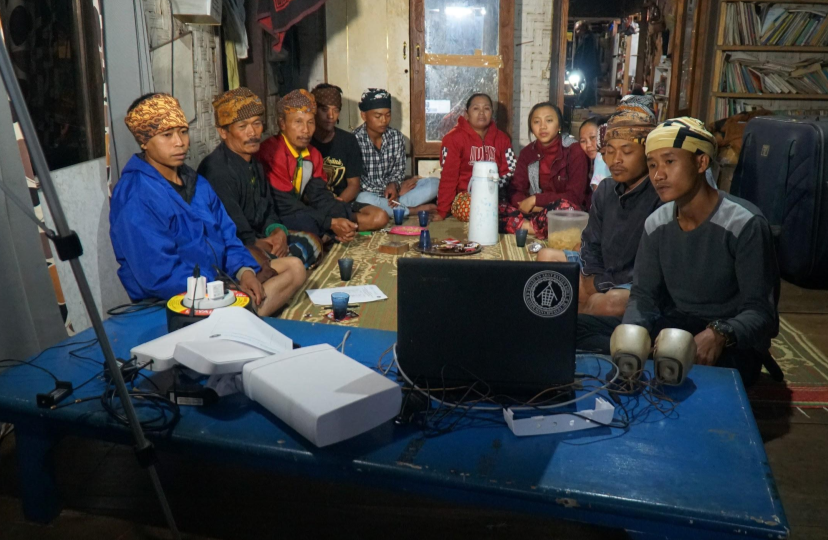
Online workshop in Ciptagelar, March 2020
The training, led by Common Room, was more than a lesson in IP addresses and configurations. It was a gathering of people who believed that the internet shouldn’t stop at city limits. They came from the School of Community Networks (SCN) – a community-based programme developed by Common Room since 2019 to support local communities in building, managing and sustaining their own internet infrastructure – and partner groups like AirPutih Association. Some had their fees partly covered by the Digital Access Programme (DAP) of the British Embassy, a gesture that opened the door to those who might otherwise be left out.
Over 10 online sessions, from 4 February to 11 March 2025, they swapped stories and solved problems together. In the peer-to-peer style, a technician from one island would troubleshoot a connection problem in another, and a young woman from a mountain village would explain how she convinced elders to support a bamboo tower for Wi-Fi. By the end, the training had given them more than just certificates; it had given them a sense that digital infrastructure could be grown, protected and repaired by their own hands.
Three models, three realities
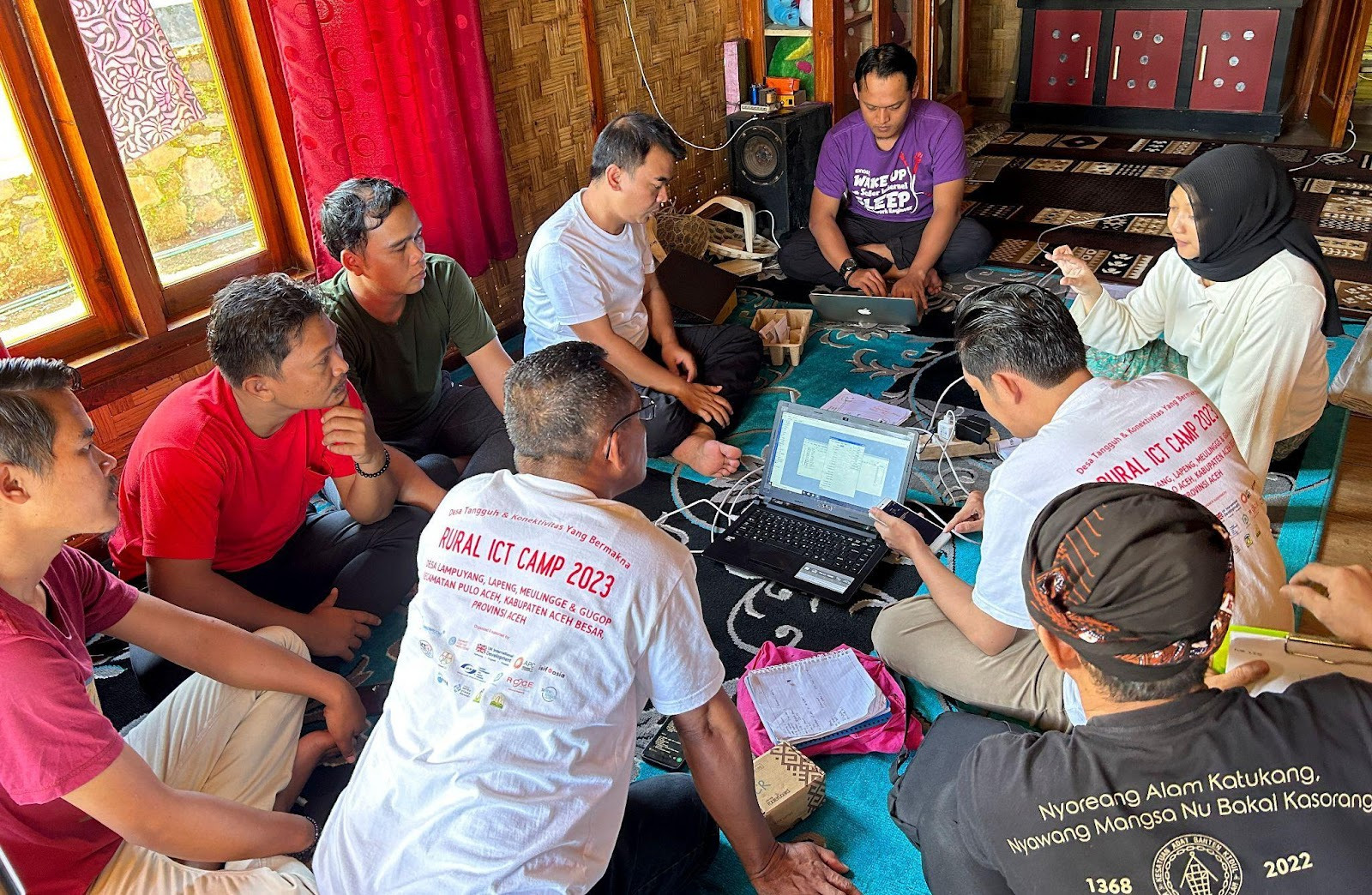
Peer-to-peer learning with participants from Nyalindung (West Java), Ketemenggungan Tae (West Kalimantan), Taliabu (North Maluku) and Gelaralam (West Java), March 2025
In the highlands of Kasepuhan Ciptagelar/Gelaralam, internet access is woven into the rhythms of tradition. Since 2016, over 700 access points have sprung up, built and maintained by local technicians, many of them Indigenous youth. The subscription fee? Just Rp8,000 to Rp10,000 (approximately USD 0.48 to USD 0.60) a day, less than a cup of coffee in Jakarta. The payment is symbolic, a sign of mutual commitment rather than a source of profit. There are no CSR budgets, no corporate sponsors, only the collective work of the community. Yet, challenges linger: technical capacity is stretched, and the network operates in a legal grey area without formal recognition.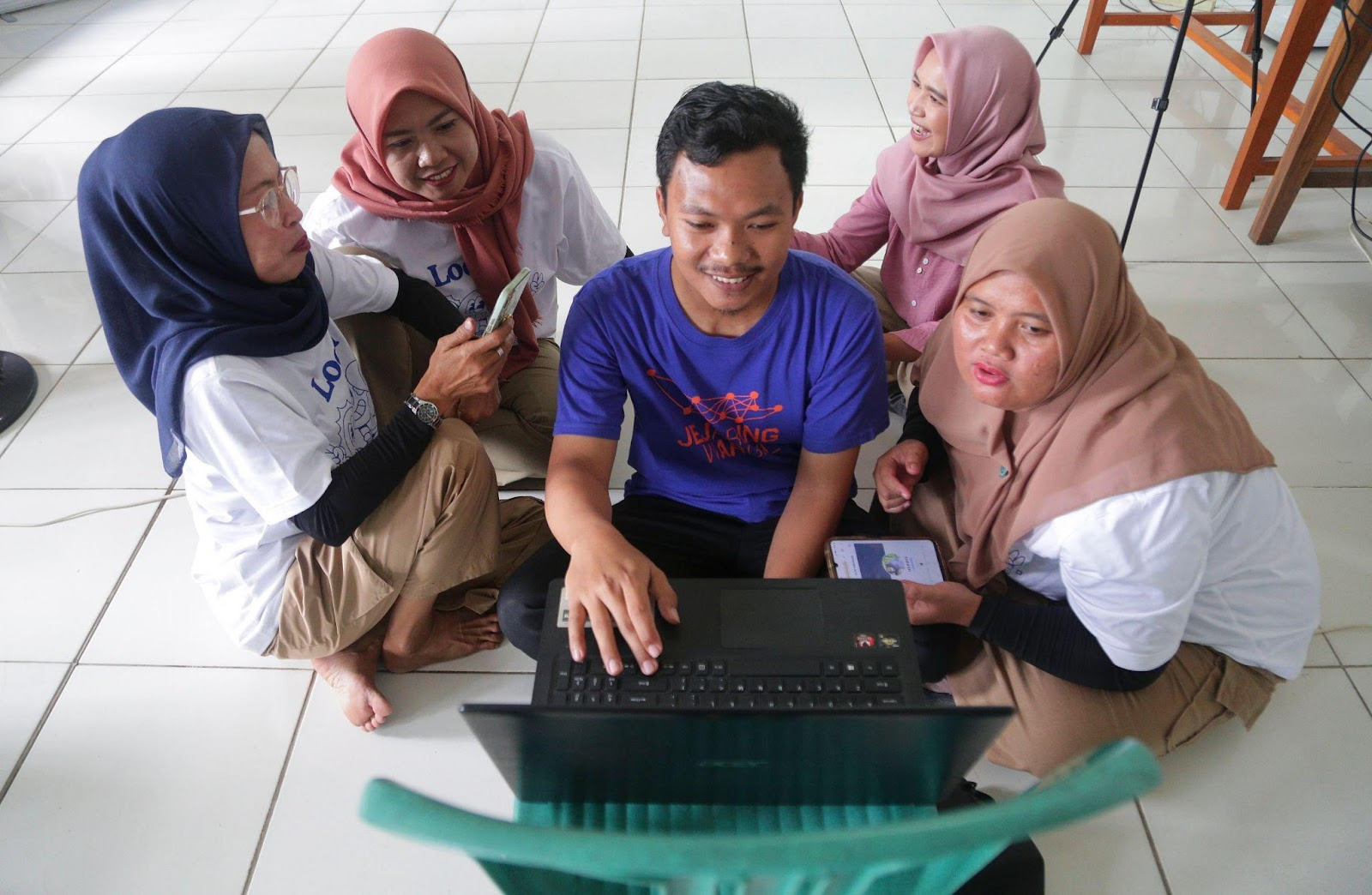
Onsite participatory data collection workshop, Ciracap (West Java), October 2025
Hundreds of kilometres away in Ciracap, the model takes a more entrepreneurial turn. Here, the network runs under a village-owned company, PT Internet Desa Digital, serving seven villages with micro-vouchers that range from Rp1,000 (USD 0.06) an hour to Rp50,000 (USD 3.20) a month. The system brings in an average of Rp35 million each month, funding operations and paying local technicians. By the end of 2025, PT Internet Desa Digital also initiated a partnership with Hasan Net, a local internet service provider (ISP), which allows the community network to act as a reseller of internet services. This collaboration has become a practical interim solution while awaiting regulatory clarity, as community networks are not yet formally recognised in Indonesia and continue to operate under legal uncertainty. At the same time, efforts such as certifying local community network technicians are being pursued to strengthen capacity and formalise technical skills at the community level.
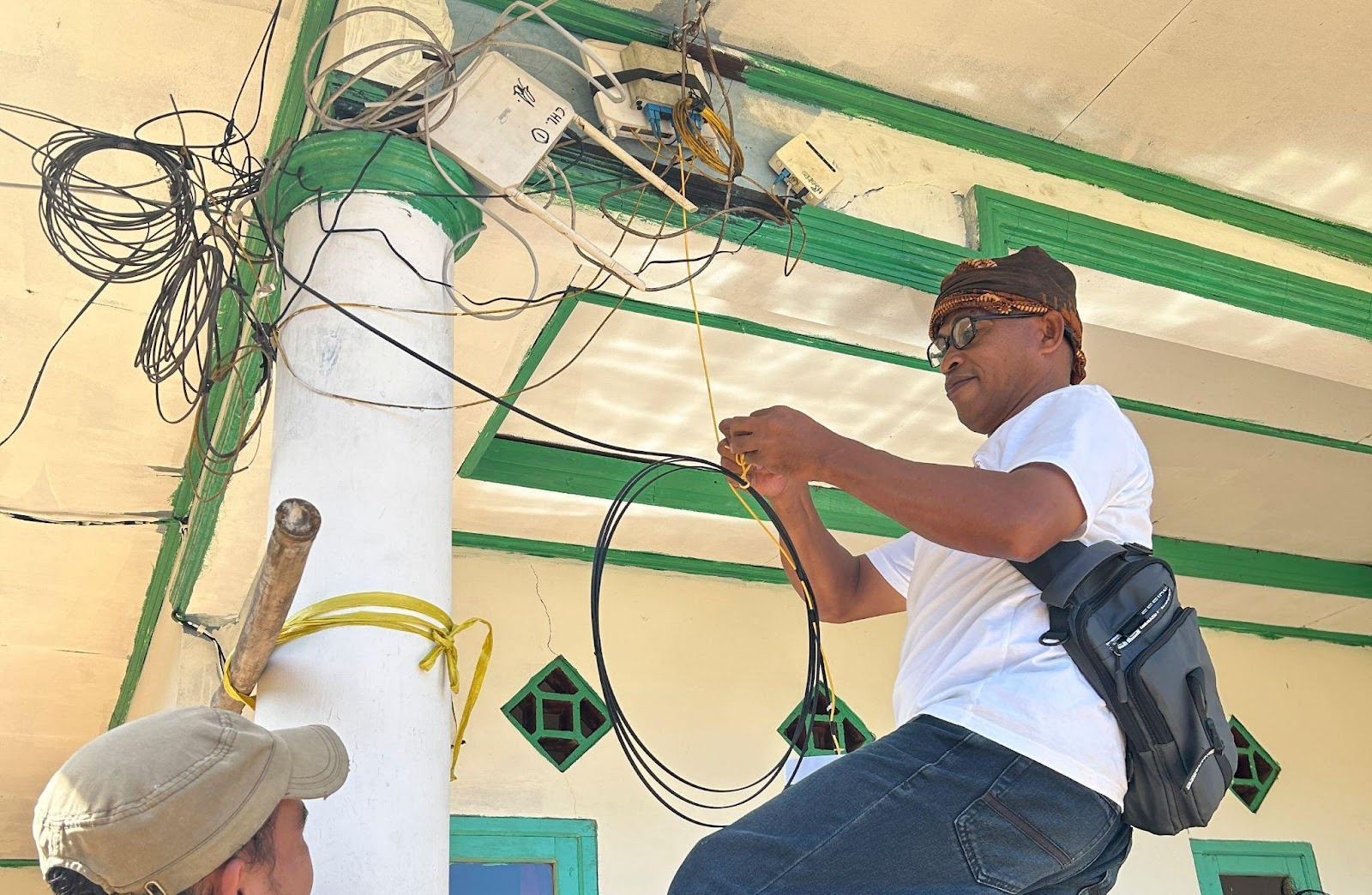
Network maintenance training in Ciptagelar (West Java), March 2024
On Taliabu Island, the story is just beginning. The locally owned enterprise known in Indonesia as a BUMD partners with a commercial provider to deliver home-based connections to 102 households, charging Rp250,000 to Rp350,000 (USD 14.8 to USD 17.7) per month. Profits go back to the village enterprise, but the network remains mostly a transactional service; valuable, but not yet a driver of social programmes or digital literacy.
Across these three sites, one lesson stands out: the health of a community network rests on a balance between solid governance, local skills, social trust, and the right kind of outside support.
The women at the switchboard
Technology, however, is never neutral. In many rural areas, access to the internet still reflects gendered divides. A literature review found the same stubborn barriers: men dominate decision making, women often struggle to afford devices, and technical roles remain male-heavy.
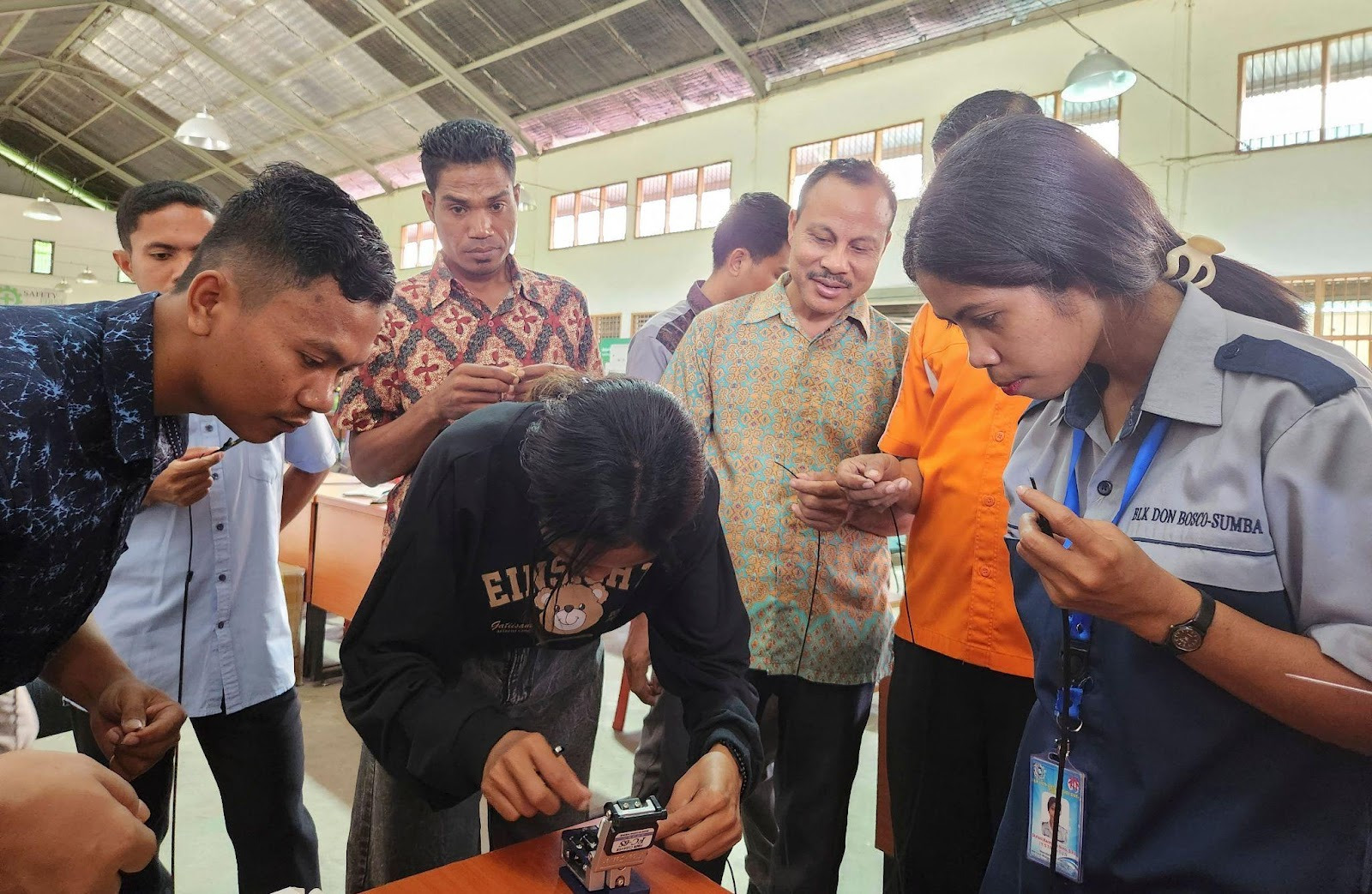
Network training for women technicians, BLK Don Bosco (Southwest Sumba), November 2023
But the story is shifting. In villages from Kenya to Bangladesh to Indonesia, women are taking new positions in the life of community networks, running Wi-Fi subscriptions, leading community meetings, and even handling technical maintenance. Programmes that combine advocacy, training and sector-specific partnerships (from healthcare to cultural preservation) have proven they can open doors.
From these experiences comes a richer definition of meaningful connectivity, one that is inclusive, participatory and relevant to women’s lives; one that nurtures self-development and safeguards the security and sovereignty of their data.
Data for the climate future
Community network programmes play an important role in making climate data useful at the local level. Through community-managed connectivity, weather and environmental data – such as rainfall, temperature, wind or water conditions – can be collected, accessed and understood directly by communities. This helps people make better day-to-day decisions, from farming and fishing to preparing for extreme weather and disasters. When combined with digital literacy and local knowledge, climate data becomes more practical and relevant, supporting early warning, local planning and climate resilience. In this context, the SCN works with communities to build not only internet infrastructure, but also the skills and practices needed to use data meaningfully at the local level.
Yet in Indonesia, climate data is still largely locked down. By law, only BMKG (the Indonesian Agency for Meteorology, Climatology, and Geophysics) can officially publish climate data, creating a bottleneck that slows innovation and limits what community initiatives like SCN can do. Without more open and shared access, citizen science efforts struggle to grow, community networks cannot fully develop local early warning systems, local startups face barriers in building climate services, and planners lack the granular, community-level information needed to protect people from floods, droughts and heatwaves.
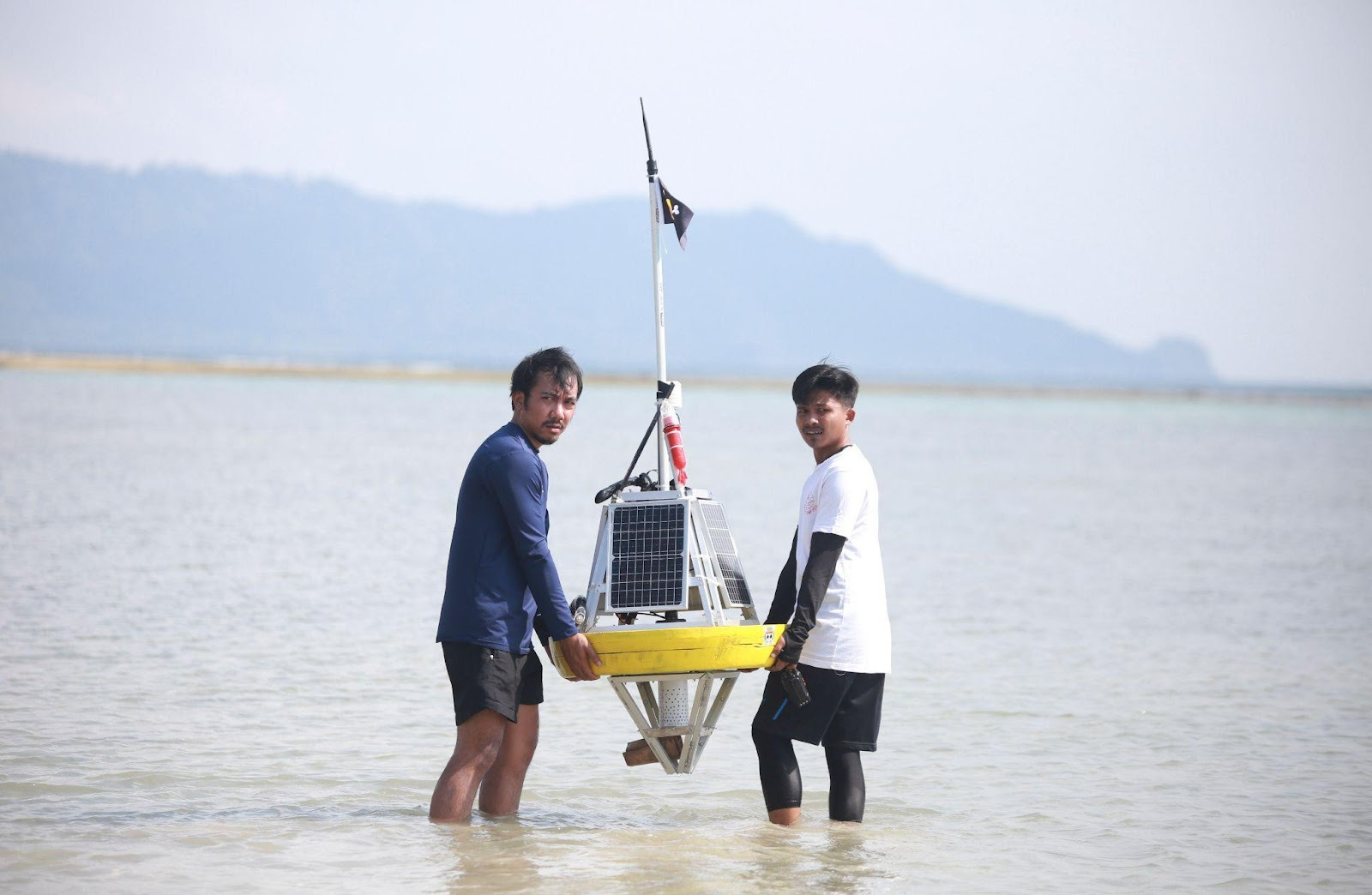
A Solitude device that functions as a sensor for ambient temperature parameters, which is part of the Community Innovation Labs for Climate Resilience (Co_LABS Project) in Pulo Aceh, February 2025
Elsewhere, the approach is different. Europe’s Copernicus programme offers free, high-quality environmental data that fuels both research and commercial innovation. In the US, the National Oceanic and Atmospheric Administration (NOAA) encourages public participation in data collection. India’s meteorological portal makes vast troves of weather data accessible. All of them show the same truth: when data is open, solutions multiply.
Weaving the strands
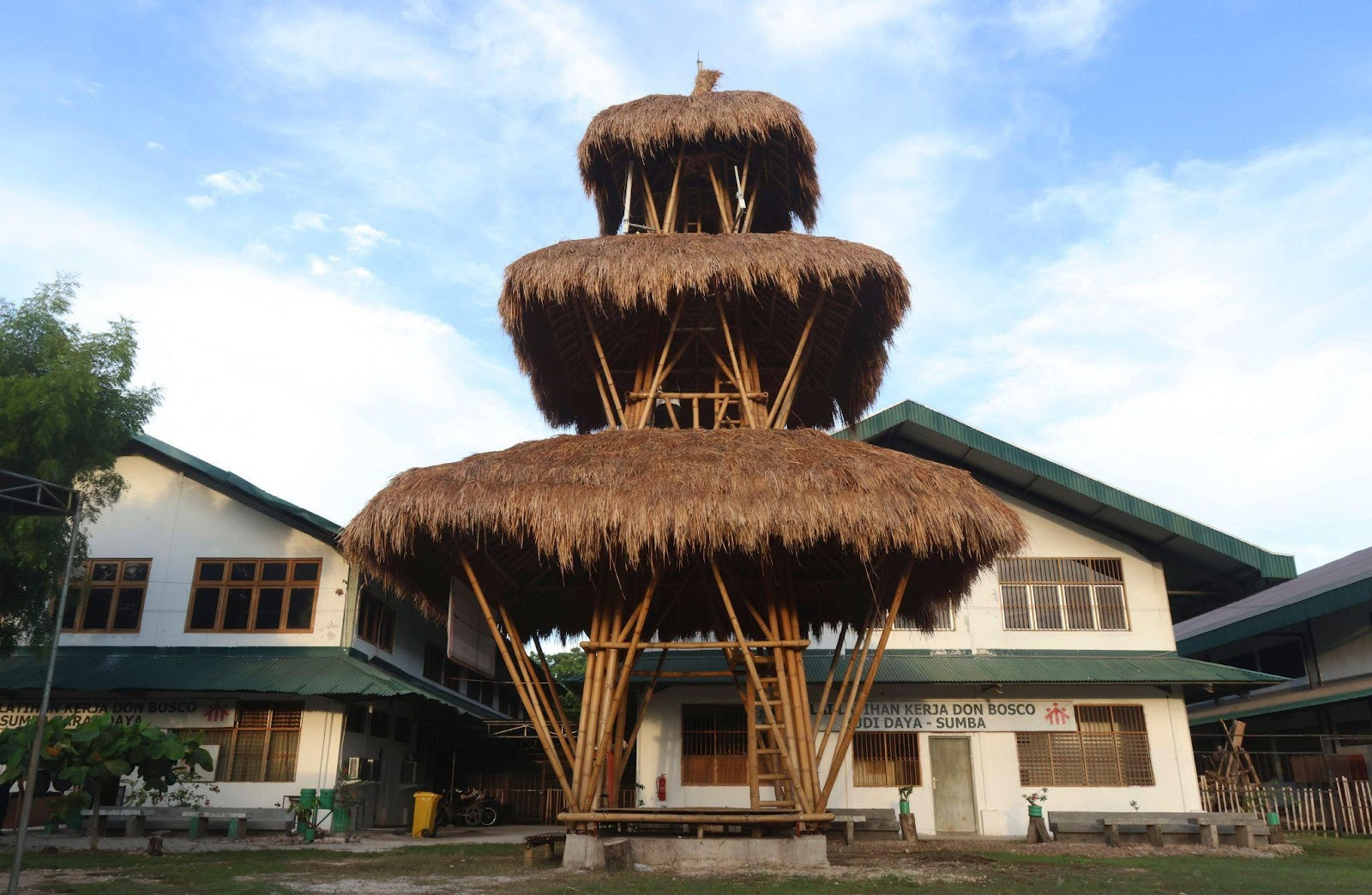
Bamboo tower in BLK Don Bosco (Southwest Sumba), February 2024
From the glow of laptop screens in remote homes, to bamboo towers in the forest, to the untapped streams of climate data locked in servers, these stories share a thread. Technology matters most when it grows from the ground up, carried by communities, shaped by their needs, and sustained by their hands.
If training like MTCNA equips skilled builders, if community business models keep the lights on, if women’s leadership makes access fair, and if open data gives knowledge its full power, then Indonesia’s digital future could be not just connected, but truly resilient.
Tisha Amelia Anwar is a highly passionate professional with over 15 years of experience in media, with a strong focus on youth, culture and education. She co-founded Belia Pikiran Rakyat in Bandung and served as its editor-in-chief from 2002 to 2019. She joined Common Room Networks Foundation in 2021 and has since grown through several roles, contributing to ICT media, community networks and community development work. Since the end of 2025 she has served as programme and cooperation manager, working closely with diverse stakeholders to strengthen partnerships, develop integrated communication strategies, and support the implementation of community-based programmes. Tisha Amelia is deeply curious about new ideas, tools and approaches that can help communities grow on their own terms. She is especially interested in how technology, when grounded in local knowledge and culture, can open space for learning, collaboration and long-term impact. Her work is driven by a simple belief: meaningful change starts by taking communities seriously as knowledge holders, not just beneficiaries.
Andriani Kesa Alivia is a programme coordinator at Common Room Networks Foundation with four years of experience leading community-centred connectivity initiatives (CCCIs). She focuses on empowering people in remote areas to gain proper internet access and utilise it meaningfully for the economy, education, health and climate resilience sectors. To date, Kesa has spearheaded digital capacity building and mentoring programmes across 14 regions in 12 provinces in Indonesia. As a dedicated lifelong learner, she constantly explores new ways to utilise the internet meaningfully and is committed to transferring this knowledge to mentored communities with all her heart. For Kesa, true success is seeing assisted regions experience the benefits of CCCI – even if that impact is as small as a single drop of rain.
Akhmat Safrudin is an experienced ICT leader with over 15 years in technology development, software engineering and cloud infrastructure. Currently serving as the Asia regional coordinator for capacity building for the Local Networks (LocNet) initiative, his current focus is on addressing the digital divide by fostering community-centred connectivity initiatives. He has a strong background in open source technology and has led initiatives in software development, the internet of things (IoT) and cybersecurity. His work spans leadership roles in tech startups and consulting, with hands-on expertise in cloud-native architecture and agile project management. Driven by a passion for change, he leverages technology to empower rural communities and build inclusive, sustainable solutions for marginalised populations.
The experience shared in this blog was supported by the Local Networks (LocNet) initiative through a cycle of microgrants made available via a closed call to the initiative's partners and community networks in Brazil, Indonesia, Kenya and South Africa. Learn more about the call here.