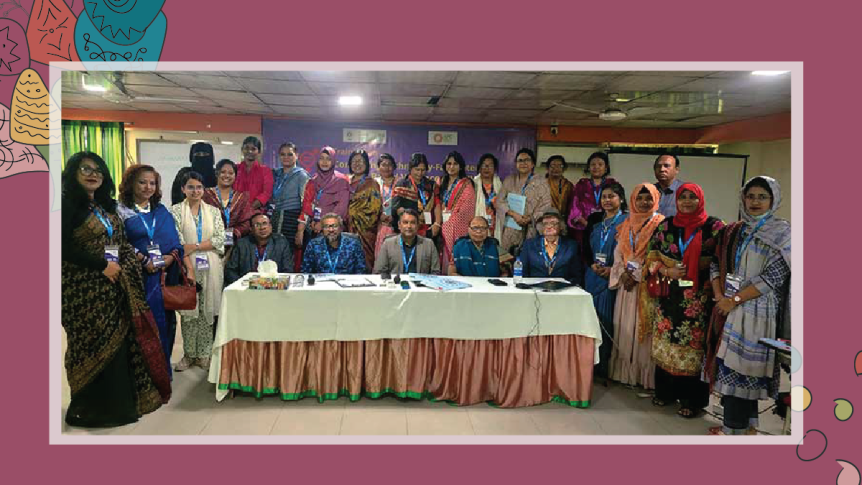
Photo courtesy of BNNRC.


In Bangladesh, where internet use has expanded quickly but protections and support systems remain uneven, technology-facilitated gender-based violence (TFGBV) is a pressing concern, with many responding by withdrawing from online spaces altogether. Against this backdrop, APC member Bangladesh NGOs Network for Radio and Communication (BNNRC) set out to strengthen the ability of women-led civil society organisations (CSOs) to prevent, recognise and respond to TFGBV as structural violations of rights that call for coordinated, feminist and rights-based responses.
Across APC’s network, members are responding to the ways in which digital technologies both expand possibilities and deepen harm, a tension that is particularly visible in the rapid growth of TFGBV. Human rights abuses offline are being reproduced online in the form of harassment, doxxing, non-consensual image sharing, cyberstalking and other types of violence. Unsurprisingly, these abuses disproportionately affect women and gender-diverse people, reinforcing offline inequalities while creating new forms of control and silence.
Supported through APC’s Research and Campaign Grants, BNNRC’s project planted seeds for longer-term change by focusing on building women’s leadership, collective learning and multistakeholder accountability.
Connecting with women on the front lines
BNNRC intentionally focused their project on organisations already responding to gender-based violence in their communities. “We designed the trainings very deliberately to reach women-led and women-headed CSOs that are already on the front line of combatting gender-based violence, but often lack specific tools and confidence to address TFGBV,” explained Hiren Pandit, BNNRC’s programme coordinator.
Named "Empowering Women-headed CSOs for Combating Technology-Facilitated Gender-Based Violence", the project ran between December 2024 and February 2025. Participants were identified through a mix of network mapping, open calls and targeted outreach beyond Dhaka, ensuring representation from various districts. All participants were women in leadership or front-line roles, responsible for organisational strategy, programme design or survivor support. This focus on leadership was adopted by design, because by strengthening the skills and confidence of women decisionmakers, it helps to ensure that responses to TFGBV are embedded into organisational practice.
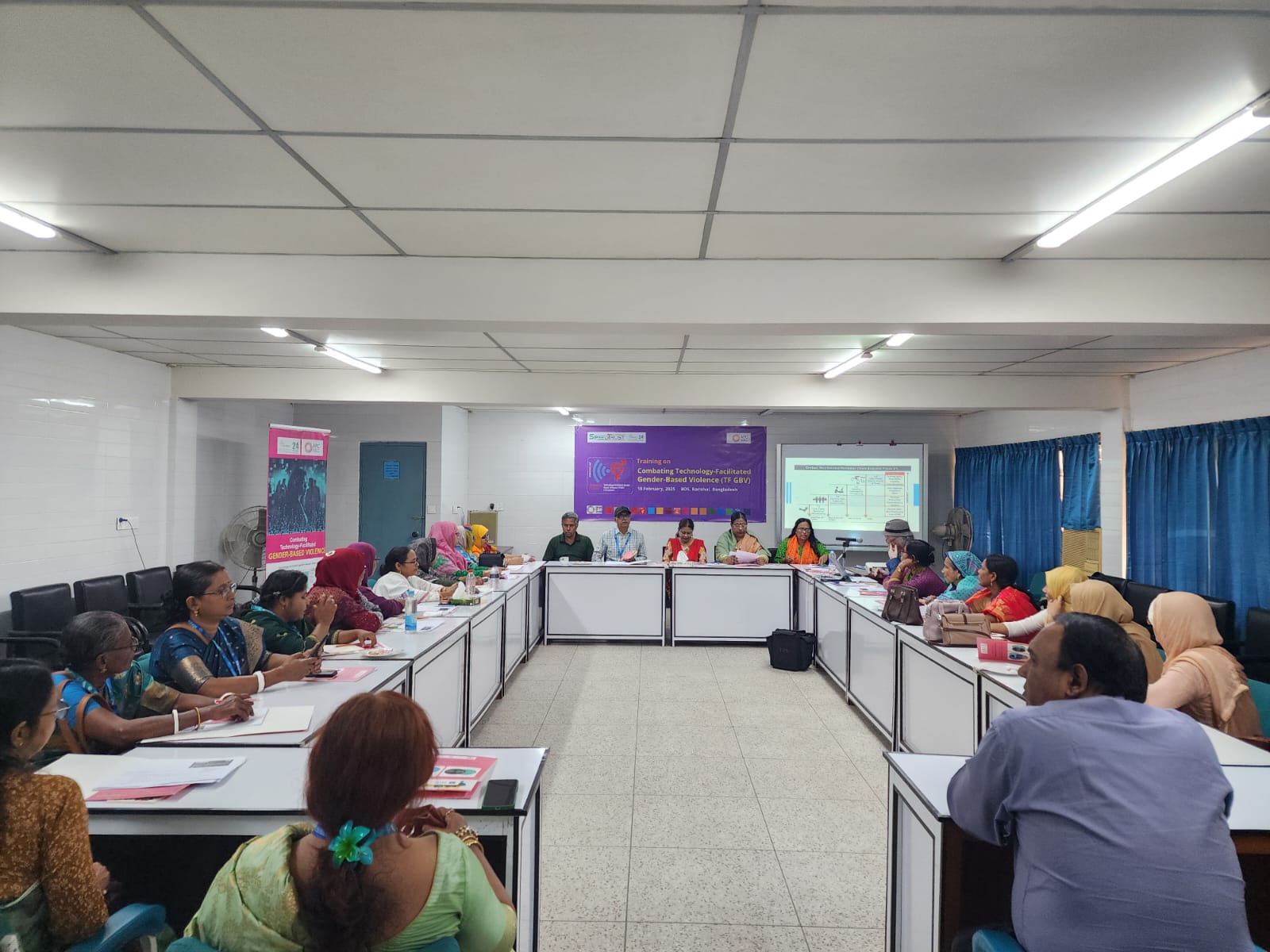
Having participants use a hands-on approach was an important element. “The trainings were structured as highly participatory capacity-building workshops rather than lecture-style events,” Pandit noted. Alongside short conceptual inputs on digital rights, privacy, consent and legal frameworks, participants engaged in exercises such as digital risk-mapping, power-mapping of institutions and analysis of real TFGBV cases from their own communities. These methods created space for reflection and collective problem-solving, while also centring participants as experts in their own contexts.
From “just hacking” to a shared language of harm
One of the most significant shifts reported through the project was a change in how participants understood and named TFGBV. “For example, several women leaders in Mymensingh openly shared that, before the training, they thought TFGBV was “just hacking” and believed “hotline” meant only dialing 999 [the national emergency help line],” Pandit explained. Through the trainings, participants learned to identify a much wider range of abuses including cyberstalking, trolling, doxxing and non-consensual data sharing.
By naming harm, participants established the precondition for challenging it, particularly in contexts where digital abuse is normalised or dismissed, and in turn demystifying both technologies and remedies. One of the most crucial pathways explored was identifying ways to connect survivors with appropriate reporting mechanisms, government apps and support services.
Feedback from participants indicated increased confidence in using digital tools for advocacy, documenting cases and advising survivors, as well as greater awareness of how technology can be used both to harm and to protect, reflecting the impact of the initiative.
The impact of the project is well illustrated through the experiences of one participant who, after attending the TFGBV training, began integrating discussions on digital safety, prevention strategies and reporting mechanisms into her organisation’s work with youth forums across 13 upazilas (which are administrative divisions in Bangladesh), reaching hundreds of young people. Recognising that many youths both experience and perpetrate online harm at a young age, she now emphasises awareness, accountability and access to support as part of everyday engagement. Her story highlights how by strengthening local actors, similar approaches can be adapted and used by others across districts and contexts.
Building bridges with institutions and allies
Beyond capacity building, BNNRC invested heavily in multistakeholder dialogue, recognising that TFGBV cannot be addressed by civil society alone. Regional and national dialogues brought together government officials, law enforcement, lawyers, journalists, academics, technology service providers, youth representatives and women’s rights organisations.
These spaces were valuable opportunities both to brainstorm creatively and also to address tensions. Participants raised concerns about gaps between policy and practice, noting frequently uneven commitment from institutions as well as inadequate transparency from tech companies. The dialogues also created critical spaces for direct engagement and mutual learning. In Barishal, for example, lawyers, police, youth representatives and CSOs jointly emphasised the importance of using formal complaint mechanisms while discussing responsible social media use and survivor-centred responses.
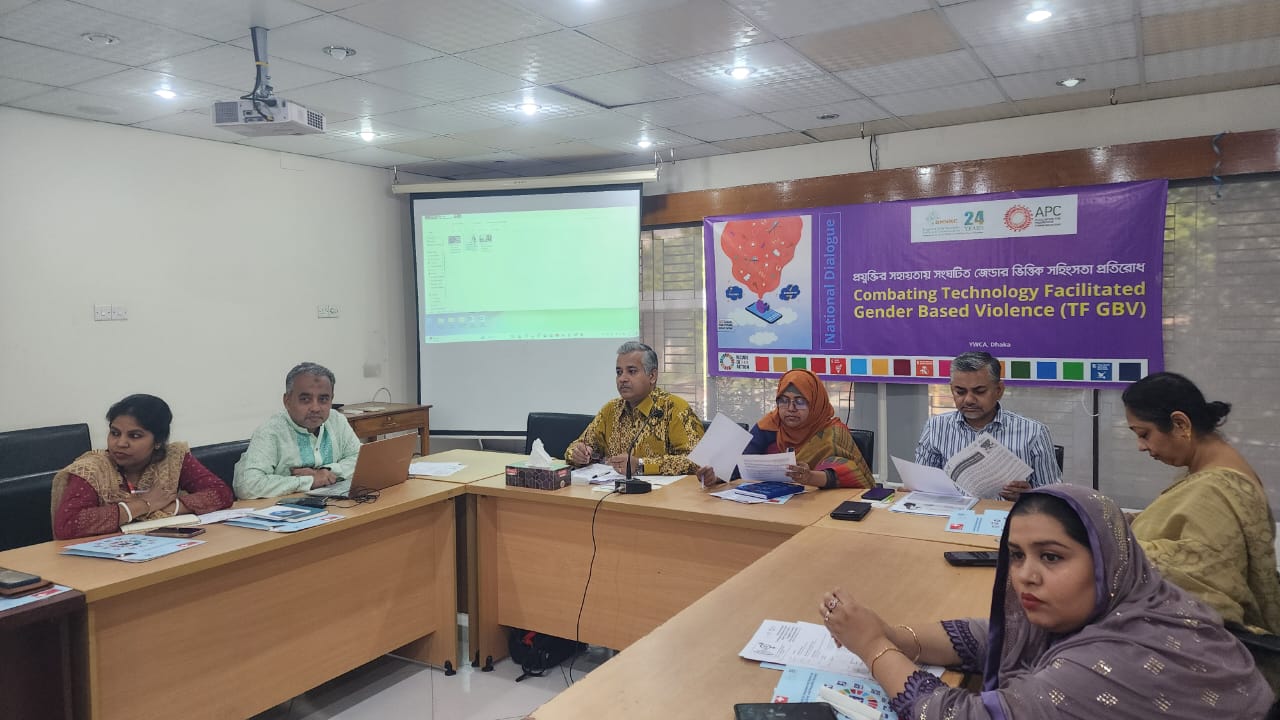
Encouragingly, the dialogues were instrumental in starting to shift accountability from individuals to systems. While some local administrators were hesitant, the process increased visibility and trust, allowing communities to see how laws and institutions can and should respond.
The media also has the potential to play an important role in amplifying this message. “Media organisations can play a frontline role in this work by integrating TFGBV into their regular reporting agenda, systematically documenting cases, patterns and gaps in digital services, and feeding this evidence into our joint advocacy and monitoring,” reflected Pandit.
Alongside trainings and dialogues, the project produced a set of resources designed for use beyond the grant period: a situation analysis report on TFGBV, a policy brief and a draft handbook (that is not available online but was shared as a PDF document). These outputs drew on local expertise and stakeholder input to map patterns of abuse, identify gaps in services and outline recommendations for prevention and response. By situating TFGBV within social, economic and cultural contexts rather than treating it as a purely technical problem, the project reinforced the need for holistic, rights-based solutions.
Reimagining safe and thriving digital environments
The work is far from over and the BNNRC team indicated that this project is the start of several important follow-up activities. “BNNRC sees this project not as an end, but as the foundation for a longer-term agenda to combat technology-facilitated gender-based violence across Bangladesh,” Pandit stated. Plans are already in place to build a peer-learning network among participating CSOs, offer ongoing mentoring and continue knowledge-sharing so that the learning does not remain a “one-off” intervention. The organisation also aims to deepen collaboration with technology companies, media and policymakers, while strengthening documentation and survivor-centred referral systems.
As digital spaces continue to be increasingly central to civic participation, economic opportunities and freedom of expression, ensuring that women can inhabit these spaces safely is a matter of priority. By empowering women-headed CSOs and grounding action in lived realities, BNNRC’s project offers a powerful example of how issues should be contextualised and grounded in concrete local realities, while local initiatives can contribute to broader struggles for digital rights. It serves as an important reminder that change is not only about resisting harm, but about collectively imagining and creating digital spaces rooted in dignity, equity and safety for all.
This piece is a version of the information provided by Bangladesh NGOs Network for Radio and Communication (BNNRC) as part of the project “Empowering Women-headed CSOs for Combating Technology-Facilitated Gender-Based Violence”, implemented with the support of a grant from APC and adapted for the “Seeding change” column.
Did this story inspire you to plant seeds of change in your community? Share your story with us at: communications@apc.org