The digital divide remains one of the most pressing development challenges of our time. According to the International Telecommunication Union (ITU), nearly one third of the world’s population has never used the internet, with rural and Indigenous communities in low-income regions experiencing the deepest forms of exclusion. In Africa, only 38% of
the population is connected, compared to a global average of 68%, with disparities further compounded by geography, income, and gender. Women continue to face lower connectivity rates, reflecting broader structural inequalities in access to technology, skills,and economic opportunity.
These gaps have significant social and economic consequences. Digital connectivity is now widely recognised as a cross-cutting enabler of development, underpinning access to education, health, livelihoods, civic participation, and climate resilience. However, traditional market-driven connectivity models have consistently failed to reach communities where commercial returns are limited. Even where network coverage exists, affordability remains a major barrier. Evidence from across the continent shows that many rural users rely on expensive, data-capped mobile services that are neither reliable nor
sufficient to support meaningful participation in the digital economy.
In response, community-centred connectivity initiatives (CCCIs) have emerged as locally driven alternatives that prioritise social impact, inclusion, and sustainability over short-term profit. These initiatives ranging from community networks to cooperative ISPs combine infrastructure deployment with capacity building, local governance, and contentdevelopment. By treating communities as co-creators rather than passive consumers, CCCIs have demonstrated their potential to expand access in underserved areas while strengthening local economies and institutions.
Despite their promise, CCCIs continue to face systemic barriers, particularly related to policy, regulation, financing, and long-term sustainability. Most telecommunications financing instruments and regulatory frameworks are designed for large-scale operators, leaving community-based models poorly supported or invisible within national digital
strategies. Addressing these constraints requires coordinated dialogue between communities, policymakers, regulators, funders, technical institutions, and development partners.
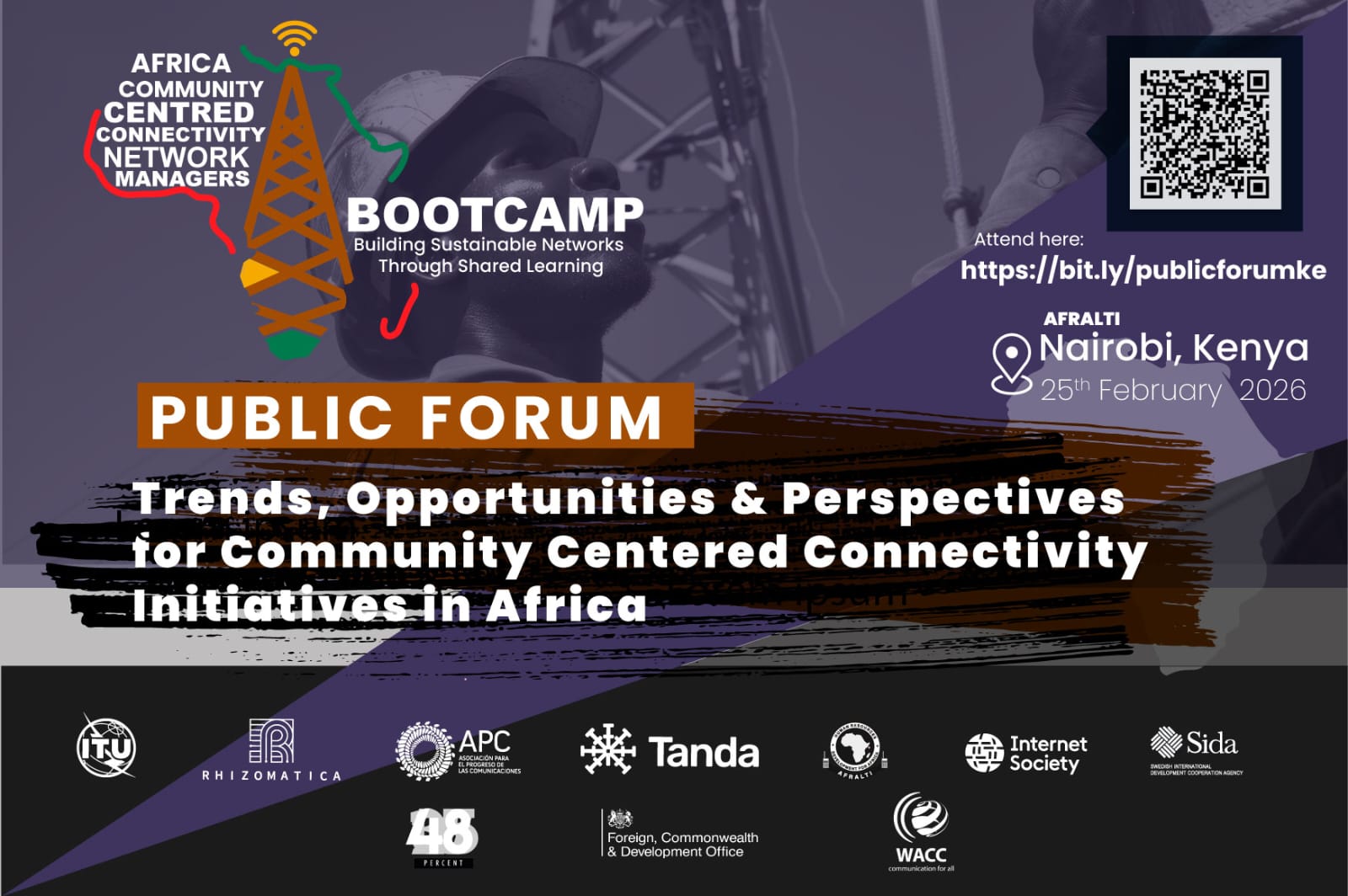
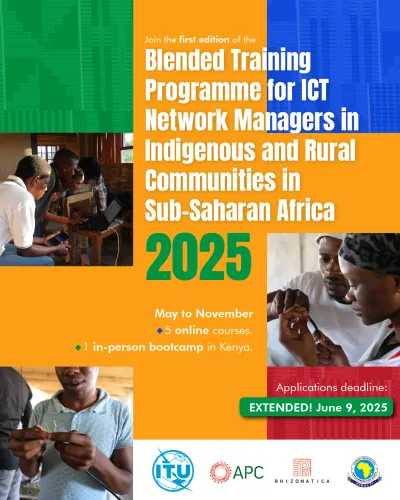
The Public Forum on Trends, Opportunities, and Perspectives for Community-Centred Connectivity in Africa, that will be held on 25 February 2026 during the Africa ICT Network Managers Bootcamp, provides a timely platform for this dialogue. Embedded within the in-person phase of the Blended Training Programme, the forum brings together grassroots
practitioners, regional institutions, government representatives, donors, and global experts to exchange experiences and explore pathways for scaling inclusive connectivity models across the continent.
The forum is structured to move beyond problem diagnosis toward practical collaboration. Through keynote reflections, panel discussions, and thematic working groups, participants will engage on issues including enabling policy environments, sustainable financing, gender and intersectionality, capacity building, community infrastructure, and local content
ecosystems. Insights from Africa will be situated within a broader global context, drawing on comparative experiences from Latin America and Asia and reinforcing South–South learning.
Taking place at a moment when digital inclusion is gaining renewed attention in global and regional policy spaces, the forum aims to elevate community-centred approaches as a credible and necessary pillar of Africa’s digital future. By anchoring global discussions in local realities and lived experience, the Public Forum seeks to contribute actionable recommendations that inform policy, investment, and programme design advancing meaningful connectivity as a foundation for equitable and sustainable development across the continent.