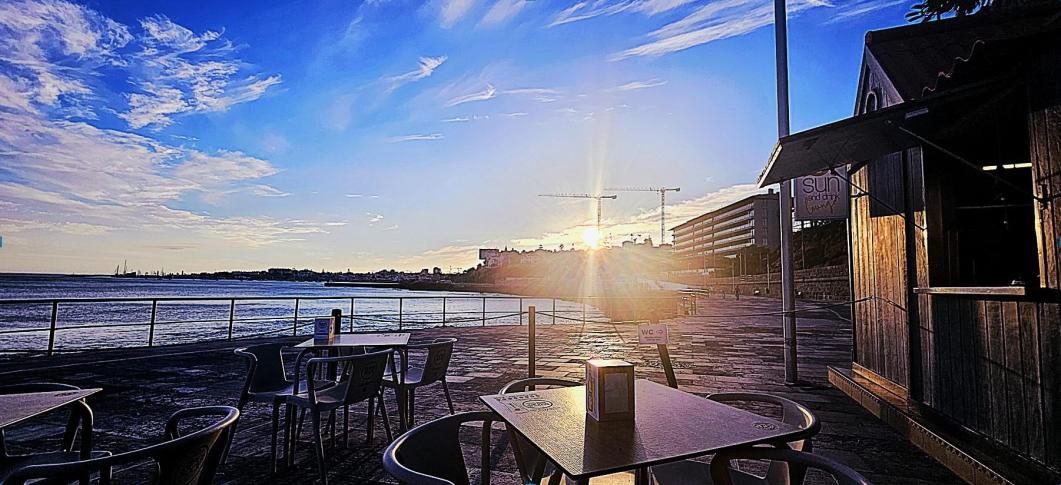


I participated in the Global Gathering 2025 at Estoril, Portugal, in September this year. It is a kind of digital craft fair, a dynamic meeting of digital rights defenders from more than 144 countries and over 1,000 organisations. Anyone you meet has a purpose and a story. And that is how I also see the world.
I am a hacktivist: so being able to attend this event is an incredible opportunity made possible thanks to APC. The venue was a sort of small hamlet made up of dozens of huts, each one creating the feel of a little village around every booth. Several members of the APC network were present with their own booth and, after almost three years of remote collaboration, it was a great pleasure to meet face to face.
This blog is the continuation of “What I shared during year's Global Gathering”, where I highlighted some of my experiences there, sharing stories from our monthly series, “Building a Free Internet of the Future”, and to build bridges between participants and the Next Generation Internet Zero (NGI0) grant funding programme.
Getting settled in
Since IndieCamps (2017-2020) and OFFDEM (2021-2024), I had not participated in this type of event or gathering at all. As far as recent memories go, I think my last intense collective experience was the workshop “Investigation into Adaptations to Climate Change” in 2023 in Rennes, Brittany, with undocumented migrants – supported by Exposing The Invisible and the Kaouenn Noz biohackerspace.Or maybe it was the Digital Investigation Residency, Berlin. Anyway I am very keen to engage in hacktivism with others.
Before arriving, throughout the journey, I reflected on the many activities with Gender Security & Gender and Technology Institute in which I had participated. During GG 2025 with some people from Feminist Internet Research Network (FIRN) we had side discussion about "What's a Crisis" right before "Feminist Care Infrastructure: How Does It Look Like?". As a professional in emergency and disaster response, and also a specialist in FLOSS, open hardware and open data, this was for me a very valuable discussion for weaving the first threads of a common understanding.
I was asked to share my experiences in Haiti following the 2010 earthquake, as well as discuss in a private moment post-traumatic stress disorder (PTSD). It is extremely rare for me to discuss these experiences, meaning I was able to “be myself”.
I learned that several of the organisations present had psychological support activities as part of their internal infrastructure.
Free and open-source technologies
Still, during Estoril event and a little further on at the Global Gathering, we began to discuss Palestinians from Gaza on Fediverse. It included the conditions they endured during their displacement and digital rights in decentralised digital spaces created by free libre software. Gaza Verified is one among other initiatives focusing on such issues. I now know that other NGOs would be willing to address these issues too. And we frankly discussed the on West-centric nature of Mastodon (see map here) and Fediverse too (see map here).
There were also well-known NGOs in the free libre open source scene: The Guardian Project, Tor project (Tor relays are also heavily concentrated on the West), Fundación Karisma, SMEX, Rise Against Big Tech (by in.fra.red) … so many that I cannot list them all. And investigative and/or human rights NGOs that use free software or proprietary software are also in the mix.
Here, everyone agreed on the need to work with free technologies, maintain them and produce new ones. In particular, and above all, through an approach that supports and finances groups and communities, and not just features developed for such and such other technical solutions. This is something that the Next Generation Internet Zero (NGI0) grant funding programme does not provide for.
I have been working with free and open-source technologies for over 15 years, as well as promoting them − plus some advocacy. It is undeniable that free libre and open-source technologies have won the sympathy of the majority of those present at GG 2025. These include open hardware, free software, open data, open standards protocols, etc.
But as soon as we mention the fact that these free libre and open-source technologies are installed in technical devices and then used to cause harm, to harm human rights defenders, to harm civilian populations, in military drones, or to harass, to track, or in many other unsavoury ways... the debates become heated.
What we are looking for?
After GG 2025, I asked people around me: “What were you looking for at GG 2025? What did you find? What didn't you find?”
To summarise what I was told:
[What] we were looking for was pretty much the international ‘tech & society community. We know the EU scene quite well, but apart from CCC and OFFDEM events, we don't get to meet the wider community very often. And we definitely found it!
We also found that there were lots of people who were sincere in what they do, not just complicated NGOs (unlike events that are more sponsored by BigTech/Big Corps).
It was great to meet people who do similar things [like us] in other parts of the world.
It was also interesting to see how everyone struggles with funding, which was a very common theme, the funding drought.
Unfortunately, everyone at GG also agrees on this fact: ‘We're in survival mode’: Women human rights defenders on digital repression and movement sustainability.
The feedback I received made me think.
It takes a whole village to form an activist group, and there were many villages of us there. In villages, we see each other and talk to each other. There is community support within a village, within the hamlet GG 2025. But there are also blind spots.
I did not take part in cleaning up the village after GG 2025, much to my regret. I usually help with this and I enjoy these moments for their almost intimate tear-down aspect.
Please don't hold it against me for picking up leftover food every evening during the event to distribute it to people in greater need than ourselves – people who were invisible in a seaside resort, people who do not have the right documents to have real access to material goods on a daily basis. These people, who are in distress, were here before GG 2025 and are still there after this event. They are there because at some time or other, somewhere, they fled from something and/or did not receive sufficient assistance or help to bring them to safety.
I met Mo* on a street corner. He had fled his village, wars, and loss of access to vital basic resources. During our long discussion, he said to me, “I have never heard of the people you are telling me about tonight.”
GG 2025 was “where digital rights defenders meet”. Yes, we activists and digital rights defenders are in great need of this kind of cocoon, a capsule closed in on itself. Perhaps we also need to create encounters that are open, reusable and free, that can be handed down and offer freedoms similar to the principles upheld by FLOSS and the human rights we defend.
This little GG 2025 story is akin to borrowing from the sum of experiences provided to human beings by others.
*Name changed.
Sharing some resources to learn more:
It is worth underscoring that the GG is not a collection of anecdotes about encounters and shared resources, or political ideas dropped on the table. What is important are the connections that have been made, which we must take care and we must nurture, and thus enable the production, maintenance and sharing of free tools and technologies. Yet, here I share some resources that were valuable to me for different reasons.
As I have been trying to learn anthropology for years, I have certain observational biases. For example, I observe and analyse how people and organisations organise their time and expend their energy at work. A contribution that shed light on what I saw at GG 2025. It comes from Tesneem Elhassan in her study report, Between Erasure and Resistance: Women’s Bodies, Memories, and Narratives under Sudan’s Fascist Islamist Regime. These are works and an author that I discovered thanks to FIRN during GG 2025.
No man is an island, as a great poet once said, and we need to relate to one another, share, and help each other.
Another valuable resource for me, as a professional in emergency and disaster response, and also a specialist in FLOSS, open hardware and open data, was the Manual de Comunicaciones de Emergencia para Redes Comunitarias Resilientes released by Redes por la Diversidad, Equidad y Sustentabilidad A.C., and Rhizomatica in October 2025, which I got to know about during this event.
Looking back on all the events at the meet, I also want to share an article and a book (freely available) that could help advance cross-cutting debates, such as those discussed at the Global Gathering 2025.
One is Nothing in Commons: the end of digital collective ownership?, where the author discusses the unease caused by their growing ambivalence, as well as the incredible difficulty, but also the urgency, of moving beyond this concept and rethinking collective goals in terms of digital tools and practices.
The other is the book, The economic and environmental sustainability of digital commons, which brings lessons learned from the 2023 Debian Project survey.
Xavier Coadic is a consultant for the NGI0 consortium, and a free/libre open source software activist with 15 years of experience in free open source cultures and communities (software, data hardware, wetware, policy makers and political groups, research and development).