


In Ecuador, threats to privacy, freedom of expression and digital security intersect with feminist, Indigenous and environmental struggles. In this context, LaLibre.net Tecnologías Comunitarias has designed a strategy to strengthen the network of those working to defend digital rights, which consists of holding an annual gathering.
LaLibre.net is an organisation committed to promoting social justice, autonomy, digital sovereignty, human and environmental rights and a free and feminist internet. Founded in 2014, its work has focused primarily on Ecuador, but it also offers services, advice and support in other parts of Latin America. Between October 2024 and February 2025, the organisation convened a diverse group of activists for the Second National Gathering of Digital Rights Defenders in Ecuador, which was held on 31 January and 1 February of this year.
The meeting cemented a network that in the previous edition had already brought together 16 people from eight organisations. At this year’s meeting, 28 people from 11 organisations gathered, including women, non-binary persons and people from Afro-Ecuadorian and Amazon communities. But the impact of coming together goes far beyond numbers. The organisation describes the first meeting of digital rights defenders in Ecuador, held in 2023, as an unprecedented initiative. It was attended by individuals and organisations that, while working towards similar objectives, often operated in isolation. It was a key first step in fostering connections, sharing knowledge and laying the groundwork for a cooperative network. This second meeting represented a major stride, as it was not only about coming together again, but also about consolidating trust, perfecting strategies and strengthening a shared vision.
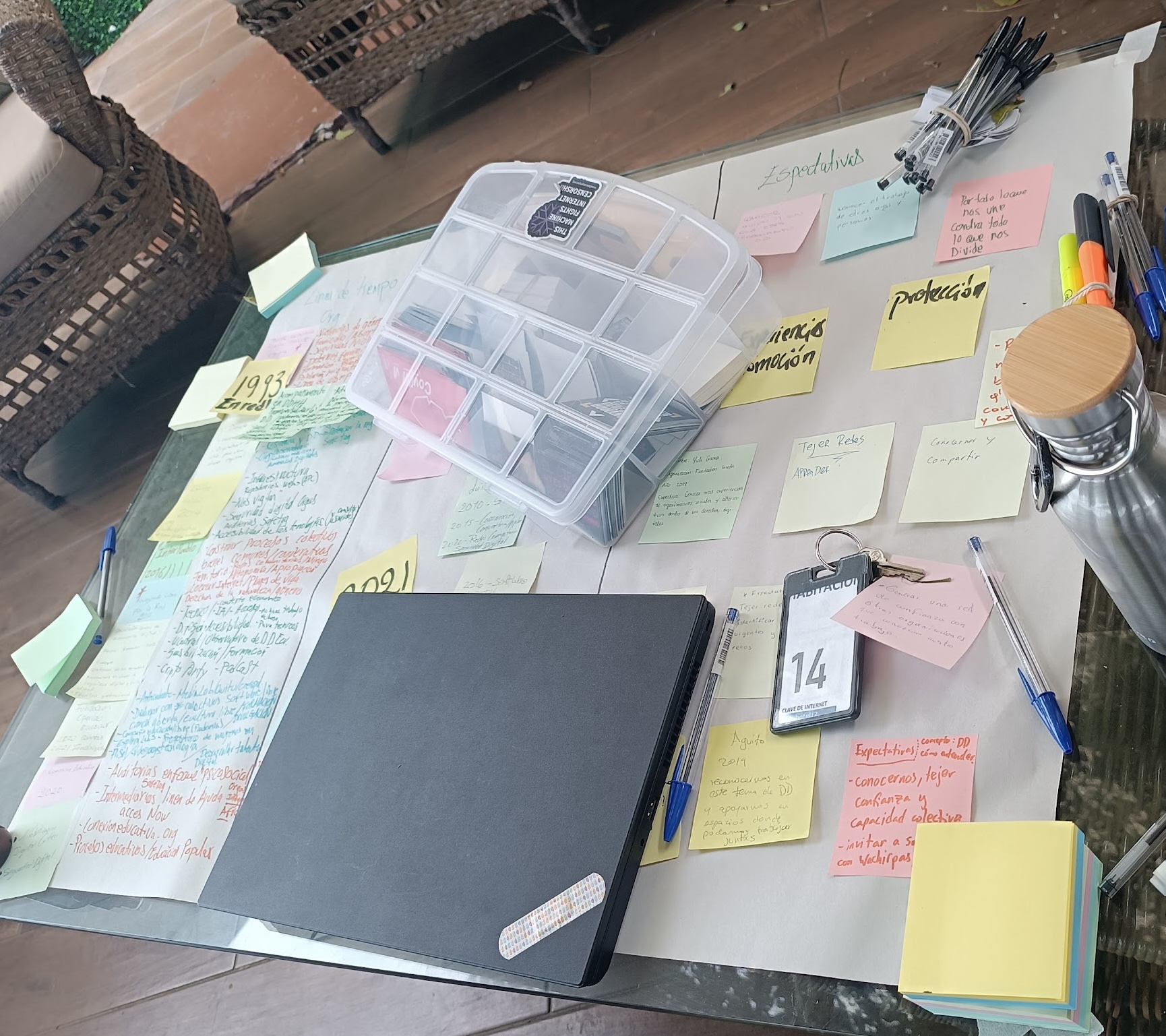
Fostering a network in complex contexts
The network’s continuity – unusual in spaces where agendas and resources tend to be fragile – is the leading indicator of its strength. “During the two very intense days of the meeting, discussions went from touching on general concerns to developing concrete strategies: digital protection plans, proposals for influencing regulatory frameworks and the search for sustainable financing,” Jonathan Finlay, founding member of LaLibre.net and project coordinator, noted. “We had a feminist expert in digital rights who acted as facilitator, and that served to boost the participants’ confidence and led us to engage in subjects that would not have been visible in other contexts.”
“The impact is felt on multiple levels. For participants, knowing that there is a network that responds, supports and shares resources when they face a digital attack or a legal threat entails greater resilience and less isolation,” Finlay stressed. “For the communities they represent, it is critical to see that the defence of digital rights is connected with the defence of their territories, cultures and lives,” he added.
Among the most tangible achievements, Finlay highlights the development of the encuentroddd.lalibre.net website, which will be an open directory of organisations that work for a free and feminist internet in Ecuador. Also, the Signal group formed in the first edition of the event has turned into a space of ongoing exchanges, for the circulation of alerts, opportunities and lessons learned that cannot wait until the next meeting to be shared.
Asked if the Ecuadorian experience is easily replicated, Finlay does not hesitate: “It is, provided the focus is placed on building networks based on trust, with an intersectional vision and long-term strategies. This formula can be adapted to contexts where there is a high incidence of serious digital threats and resources are scarce.”
What comes next
The third edition, planned for 22-23 January 2026 in Quito, will not be starting from scratch: it will be building on a vibrant, connected community that is growing and ready to continue seeding change. Almost a year after the Second National Gathering of Digital Rights Defenders, the organisation notes that this third edition comes at a key moment for Ecuador: a time when technologies are used for both control and resistance, with critical voices facing censorship, but also with a growth of solidarity networks and digital organising.
“We come together again to think collectively, align strategies and strengthen a national network that refuses to stay silent in the face of abuses, that demands transparency and promotes digital security, privacy and free access to information, as we have been doing all this time,” the announcement for the upcoming edition reads.
This piece is a version of the information provided by LaLibre.net as part of the project “Weaving a network of digital rights defenders in Ecuador”, implemented with the support of a grant from APC and adapted for the “Seeding change” column. Did this story inspire you to plant seeds of change in your community? Share your story with us at: communications@apc.org