

You are reading the third edition of Change in Motion, a quarterly special digest from APC on the work and reach of our network. Here you’ll find key highlights from our team, partners and from our many members and associates over 60 countries, especially in the Global South. As we publish our first issue of 2026, the year’s early events reflect our growing concerns.
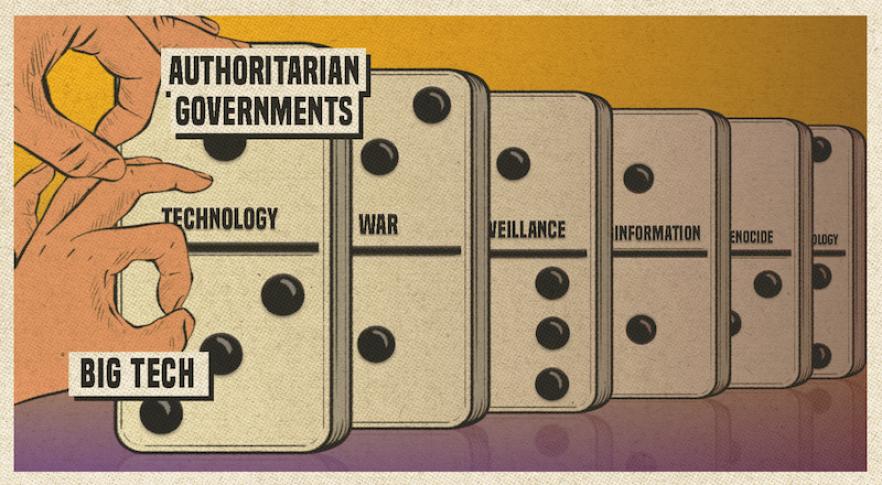
As you read these lines, millions of people are suffering violence and rights violations in the Southwest Asia and North Africa (SWANA) region, as a consequence of the Israel-US attack on Iran, Israel war on Lebanon and ongoing genocide in Palestine, and further destabilisation in Sudan. While reinforcing our solidarity, in this edition we feature information from members in the region on how digital technologies have become central tools for surveillance, attacks and the manipulation of information to fuel war. APC has also gathered some information on ways to support local efforts during this critical time.
As we wrap up the month that includes International Women’s Day, the APC community is also shedding light on urgent challenges on gender, power relations and tech. As systemic failures and abuses unfold before us, the APC community is sharing analysis, while identifying existing pathways to confront these trends. Continue reading to find out more
Centring human rights, gender and environmental justice
Our member in Lebanon Social Media Exchange (SMEX) alerts us to how the war has unfolded on the digital front during the first week of the regional crisis, while also explaining the onset of a digital war in the country.
7amleh – The Arab Center for the Advancement of Social Media has released a new report that provides an in-depth analysis of how European policies contribute to financing and exporting advanced digital technologies used in contexts of surveillance, control and repression, including in the occupied Palestinian territory and countries across the Middle East and North Africa. They also just held the Palestine Digital Activism Forum 2026, bringing people together to learn how to counter disinformation, protect digital spaces, and uphold the truth.
From Latin America, Derechos Digitales reflects on the militarisation of artificial intelligence and gender-based violence in contexts of war and armed conflict.
The Feminist Internet Research Network just launched 10 groundbreaking research reports grounding technology-facilitated gender-based violence (TFGBV) in lived realities.
At this pivotal moment, a feminist analysis of women human rights defenders’ digital experiences also shows that through surveillance laws, content moderation policies and internet shutdowns, governments and tech companies justify the silencing of dissent while shielding themselves from accountability.
In Bangladesh, where TFGBV is a pressing concern and many are responding by withdrawing from online spaces altogether, APC member Bangladesh NGOs Network for Radio and Communication (BNNRC) set out to strengthen the ability of women-led civil society organisations (CSOs) to prevent, recognise and respond to this violence.
The voices of women and queer communities in Myanmar have often been silenced, yet feminist storytellers continue to write, document and create. Through the Feminist Storytelling Grant, Exile Hub supported 20 women and gender-diverse storytellers in 2025. To mark International Women’s Day, they released a video highlighting three storytellers whose work embodies the spirit of this initiative.
PROTEGE QV launched the report "Disinformation: An obstacle to women’s freedoms in Cameroon?" Through concrete case studies, it highlights the mechanisms of gendered disinformation and its impact on women’s fundamental rights in Cameroon, particularly in the areas of political and electoral participation, women’s leadership, digital platforms and reproductive health. [Available in French.]
Nupef’s participation throughout COP30, the 2025 United Nations Climate Change Conference, reinforced a central point: there is no climate justice without technological justice. [Also available in Portuguese.]
Over the years, the Niger Delta has experienced severe environmental pollution, impacting livelihoods, water sources, farmlands and air quality. There, the Media Awareness and Justice Initiative has deployed low-cost technologies to collect and analyse real-time environmental data, strengthening advocacy, awareness and accountability efforts across Nigeria. To view and download real-time data from deployed air quality monitors across various locations, visit the DATACAB environmental portal.
“What if the soil that the seedlings are planted in could talk?” asks Argentina-based AlterMundi, which is currently working on the development of a technological ecosystem for agroecology. Their aim is to expand the reach of “LibreIncu”, a real-time monitoring system that measures temperature, humidity, pH levels, conductivity, nitrogen, phosphorus and potassium, recently recognised by local legislature for its contribution to community development, local production, and technological and food sovereignty.
Unwanted Witness and the Women of Uganda Network released this comprehensive investigation into the deliberate, phased and centrally coordinated internet disruptions imposed before, during and after Uganda’s January 2026 general elections. Some of their insights were also shared in this article for APC.org.
See also a statement by CIPESA issued on 19 January condemning the internet disruptions and expressing concern over the broader pattern of repression, including relentless attacks on civil society organisations, in Uganda.
In Paraguay, TEDIC – an active member of the Fairwork network since 2021 – presented this national report offering an in-depth analysis of how platform-mediated work continues to be consolidated in the country. Fairwork assesses working conditions on digital labour platforms such as Uber, Bolt, Cabify and PedidosYa, among many others.
This research by Derechos Digitales documents the existence of an illegal market for personal data operating on Telegram, with possible links to government databases in Latin America, where anyone can obtain within seconds data associated with an ID number, name or phone number. [Also available in Spanish and Portuguese.]
Building common agendas
A new APC member, the Progressive Technology Project (PTP), is organising resistance to oppressive corporate technologies through political education, movement building, and creating people-controlled technology. From the United States, they highlight that to fight Big Tech, we must work together with as many other like-minded networks as possible.
A collaboration between our members Colnodo and eQualitie has culminated in the launch of the Areopagítica project: Digital Security and Resilience for Democracy. It aims to strengthen the digital security capabilities of civil society organisations, human rights defenders and independent media, particularly in the context of Colombia’s upcoming elections, where online risks are on the rise. [Available in Spanish.]
The Foundation for Media Alternatives (FMA) underscored the importance of integrating digital safety into community connectivity efforts during the Philippine Community-Centred Connectivity Initiatives Bootcamp, held from 26 to 28 November 2025. The three-day bootcamp convened community network builders, social enterprise leaders and digital rights advocates to strengthen inclusive and community-driven approaches to connectivity.
Mexico also hosted a gathering on community networks, bringing together collectives and organisations from across the country and from Colombia. This new video by REDES A.C. highlights some of the key moments from the four-day meeting, during which participants shared experiences, knowledge and aspirations to strengthen technological autonomy from within their surroundings.
In Colombia, the Esmeralda Community Network was born. Supported by APC member Colnodo, this network currently benefits 86 households and 120 families in Colombia, who can move across the land and connect to the internet reliably, without losing signal between zones or depending on a node with limited coverage. [Available in Spanish.]
In Indonesia, our member Common Room is supporting multiple community networks experiences in the country. This blog post from from the Local Networks initiative features the different ways they are connecting underserved communities, while building the local capacity of men and women.
Recent bootcamps in Kenya, Africa and Mexico, Latin America, marked the conclusion of two editions of the Blended Training for ICT Network Managers in Indigenous and Rural Communities in both regions, coordinated by APC members REDES A.C. and Rhizomatica and supported by the Local Networks initiative. The Africa edition convened 44 participants from 18 countries, while the edition in Latin America gathered 85 participants, involving community communicators from 14 countries.
This special newsletter summarises the learnings from the webinar “Nigeria Strategy for Community-Centred Connectivity Initiatives: One Year On: From Strategy to Action”, which brought many members and partners together at the end of 2025 to review the progress in operationalising the country's national strategy on this front, addressing aspects ranging from backhaul access to facilitating finance, and from capacity building to gender equity.
Collectively shaping digital policies and processes
Among the most urgent and under-regulated consequences of AI deployment is the rise of technology-facilitated gender-based violence (TFGBV), including automated harassment, deepfakes, gendered disinformation and surveillance-enabled abuse. This research by APC provides a comprehensive analysis of this intersection, while also examining critical gaps and exploring how to tackle them.
The 70th session of the Commission on the Status of Women (CSW) just took place from 9 to 19 March. This year, APC hosted and joined online spaces focusing on TFGBV, gendered misinformation and disinformation, technology and war, and cross-issue feminist solidarity building. We also held a webinar marking 20 years of the award-winning Take Back the Tech! (TBTT!) campaign, reflecting on its history, the current state of TFGBV, and alternatives to disrupt digital platforms that allow this violence to prevail.
As we celebrate that the Internet Governance Forum (IGF) was granted a permanent mandate during the UN General Assembly back in December, the APC community’s advocacy gained recognition and attracted new opportunities in 2026. Our member TEDIC's executive director Maricarmen Sequera Buzarquis and Valeria Betancourt, APC’s programmes manager and internet governance lead, are among the world’s most influential leaders advancing responsible tech policy, digital governance and international cooperation, according to the Tech Diplomacy Global 50. In another positive development, the Digital for Development (D4D) Hub welcomed APC as the new chair of the D4D Hub civil society and academia advisory group (CSAG).
In the wake of the 2021 military coup in Myanmar, Telenor – the country’s Norwegian-based telecommunications provider at the time – has become the focus of a groundbreaking corporate accountability case for digital rights. APC member Myanmar Internet Project (MIP), along with other civil society organisations and individuals, have undertaken legal action against them, challenging the company’s role in disclosing sensitive personal data to the military junta.
Strengthening our collective holistic safety, care and digital resilience
The Digital Justice Network produced a guide that originated from the realisation that civil society organisations and activists need help in establishing generative AI policies and properly utilising these tools when necessary. They consulted domestic activists and also those from the APC network on which AI tools are actually being used for which tasks, how useful generative AI is perceived to be, and what problems users are experiencing.
Our member GreenNet was featured by The Guardian as a 100% renewable and sustainability-oriented from top to bottom nonprofit, which topped Ethical Consumer’s rankings (in which Gmail and Outlook both scored zero).
From Venezuela, EsLaRed shared its progress on a new project: the development of a virtual campus that it has called ORBIS. It will serve as an advanced knowledge centre, providing a direct connection to the virtual spaces of APC member organisations towards strengthening the network’s collective intelligence.
44 free and open source projects have been selected to become beneficiaries of the NGI Zero Commons Fund. The selection covers the entire technology stack, from trustworthy open hardware to services and applications providing user autonomy.
Our "Building a Free Internet of the Future" interview series, which highlights the experiences and perspectives of individuals and communities supported by the NGI Zero (NGI0) grants, continues this year, and has already highlighted two interesting initiatives on building better, decentralised social media applications and becoming independent of big corporations and their cloud servers.
Before you go
This is the third edition of our special quarterly digest on the impact of the APC community. This digest will also be available on APC.org in Spanish and French, in addition to English. Republishing and new translations are more than welcome – please contact us at communications@apc.org if you can help spread the word about our network’s impact. If you're part of the APC community, you can use the same email address to send us your highlights for possible inclusion in the next issue of this digest.
Thank you, and see you in the next edition, coming your way in June 2026. In the meantime, if you’d like more frequent updates, sign up for our APCNews newsletter, published every two weeks.
Custom illustration by Paula Villar