Environment & ICTs
ICTs, Climate Change and Development: New Concept Paper and Scoping Study
Two new documents on ICTs, climate change and development are available online at: http://www.niccd.org/resources.htm
Concept Paper: builds four new conceptual models –
i) Climate change vulnerability in developing countries;
ii) Climate change adaptation and adaptive capacity of communities and wider “livelihood systems”;
iii) Climate change resilience;
iv) The contribution of ICTs to
Site dedicated to building the networking and professional capacity of individuals working on the evaluation of climate change and international development projects and programs. The “Climate-Eval” community of practice is a network oriented at building and improving the quality of information shared through the site.
JAKARTA: Time for Reel Action Climate Crisis Video Launch
Coinciding with World Environment Day EngageMedia is launching a curated compilation of videos that deal with climate change issues from an Asia-Pacific perspective. Time for Reel Action (T4RA) is a video compilation of climate change stories that explores the impacts, the action and climate solutions emerging from the region.
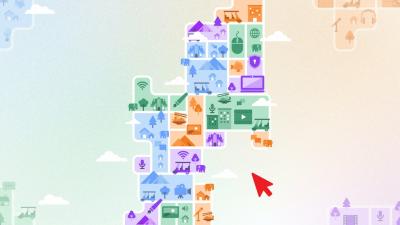
Google Earth’s attempt to explore the potential impacts of climate change on Earth and solutions for adaptation and mitigation, in the context of the United Nation’s Climate Conference (COP15) in Copenhagen.
The International Congress on “Media literacy and digital cultures”
Euro-Iberoamerican
Congress ATEI
Media literacy and digital cultures
Seville, May 13 and 14, 2010
Held by:
Asociación de Televisiones
Educativas y Culturales Iberoamericanas
Presentatio
Rightsizing Telecoms
The current financial crisis has been branded as that of the banking, insurance and automobile industries. However, other sectors—namely telecommunications—which are seemingly humming along should not be ignored by those interested in maximizing today’s economic lessons. Turning a blind eye toward a profitable industry should no longer be an option. Industry regulators and legislators must be prepared to take proactive action before an industry falters.
Taking inventory is a good starting point. The United Nations Conference on Trade and Development (UNCTAD) recently issued its 2009 Information Economy Report. The report focuses on the development implications of information and communication technologies (ICTs) worldwide. The position of the US should be ringing some alarms.
Planting the Knowledge Seed: Adapting to climate change using ICTs
Studies reveal that the use of information and communication technologies (ICTs) makes up 2% of all global emissions – the same amount as the airline industry. By 2012, 4.5 billion people will have access to a mobile phone – the majority will be those live on less than USD 2 a day and be the most likely to be affected by climate change. Planting the Knowledge Seed – Adapting to climate change using ICTs a publication from the Building Communication Opportunities alliance, explores the practical linkages between climate change, access to and sharing of information and knowledge and communication for development
Going green with a Solar Mobile Phones Chargers
How does the solar cell phone charger work?
The solar cell phone charger works very simply. Instead of using an energy
company, the Sun charges the phone’s battery.
New report on climate change and ICTs: What information and knowledge can do
Studies reveal that the use of information and communication technologies (ICTs) makes up 2% of all global emissions – the same amount as the airline industry. By 2012, 4.5 billion people will have access to a mobile phone – the majority will be those live on less than USD 2 a day and be the most likely to be affected by climate change. “Planting the Knowledge Seed – Adapting to climate change using ICTs”, a publication from the Building Communication Opportunities alliance, explores the practical linkages between climate change, access to and sharing of information and knowledge and communication for development.
The documentary on the historical event of establishing the first Small and Medium Forest Enterprise (SMFE) in India
The Government of India as a part of its state planning under the eleventh plan is promoting Small and Medium Enterprise to enhance the rural income and ensure rural development. National Afforestation and Eco-development Board as a working body of Ministry of Environment and Forests, is facilitating Joint Forest Management Committees for their sustenance by implementing seven Small and Medium Forest Enterprise pilot projects through its Regional Centres in seven different regions.